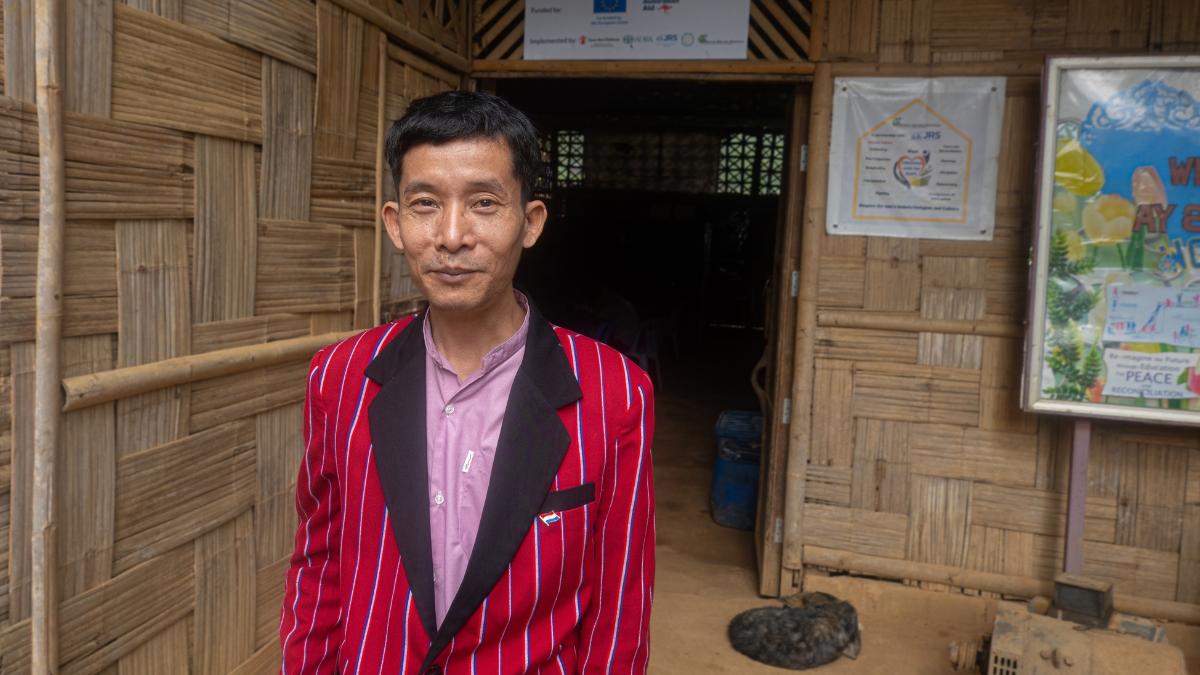
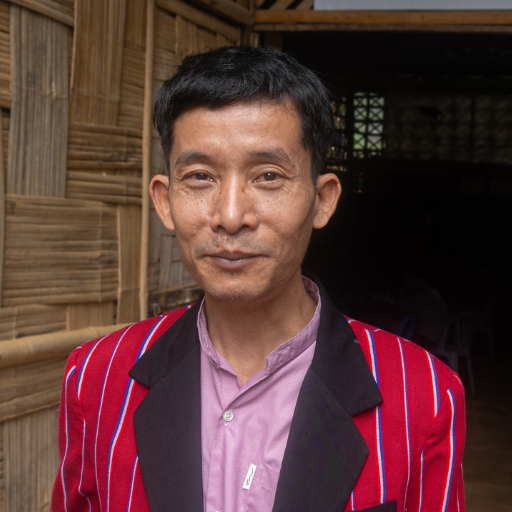
Originally from Karenni State in Myanmar, Sai fled across the border to Thailand in 2004 after armed groups attempted to recruit him as a soldier.
Having recently finished high school, he feared being forced into conflict and made the difficult decision to leave his family behind in search of safety.
“I did not want to be a soldier because this is not my career, and I do not want to fight anyone,” Sai says.
“I did not want to be a soldier. I do not want to fight anyone.”
Sai
After arriving at the refugee camp alone, Sai hoped to continue his education.
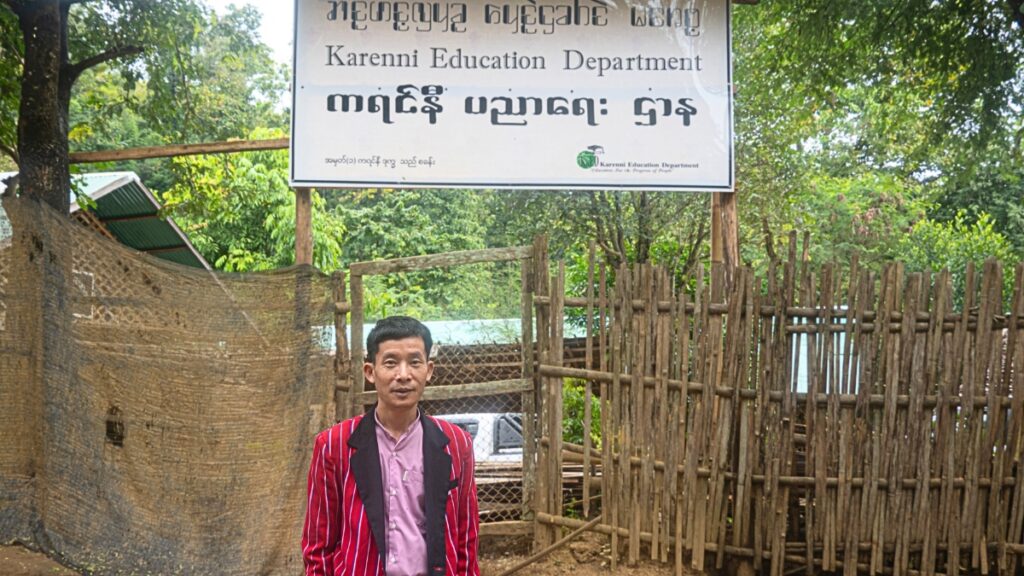
He joined a teacher training college in the camp and began working with Karenni Nationalities Education Department (KNED), our project partner, in 2006.
Sai first worked training teachers before helping develop curriculum for Karenni education. Over the years, he took on increasing leadership responsibilities, serving as coordinator, basic education coordinator and eventually Deputy Director.
Today, Sai oversees education programs supporting more than 3,000 students across two refugee camps and border communities.
A hunger to study
Since the 2021 military coup in Myanmar, the need for education has only grown more urgent. Many schools have been destroyed or forced to close, pushing children and families to flee violence and continue learning in temporary jungle classrooms or refugee camps.
Many students arriving from Karenni State are, as Sai describes, “hungry to study” despite the challenges they face.
Life in the refugee camps remains uncertain, with restrictions on movement, lack of food and healthcare, limited funding and ongoing concerns for families fleeing conflict in Myanmar.
“Even though we are safe here, there are still many challenges faced by our community. If we talk about all the challenges, sadly we would need all day to talk about it,” Sai says.
Despite this, Sai remains deeply committed to supporting young people through education.
“I felt like I was in an important role for my community because education in the camp is really needed for the students and for our younger generation to bring change.”
Find out more about this program
First Spiritual Exercise – Compassionate Peace
God of compassionate peace, teach us to respond with kindness and compassion to refugees and displaced families in Thailand and around the world.