Edit

May 10, 2013 Thank you to all involved in the Sydney Golf Day, April 18, 2013.

Manly Golf Club was the venue for the annual Jesuit Mission Sydney Golf Day on Friday 18 April. The weather was superb and contributed to the excellent golf played by our 83 competitors. The winning team on the day was a four including Nick, Charles, Jonas and Sam Cuschieri. The Norm Lubeck Trophy was one by Matthew Greene, Nathan McGully, Des Hones and Ailsa McKinnon. All competitors participated in the hole-in-one competition however no one was successful on this occasion.

A big thank you to all our supporters, corporates and individuals, who donated goods for the silent auction and raffles, sponsored the golf holes and the players who helped to raise over $30,000 for the Kasait program.

Thank you to the 115 guests who attended the dinner and to Fr Phil Crotty who spoke informatively about the exiting happenings at Kasait. Also thank you to Paul Smith, the original event manager, who recently returned from overseas and did a wonderful job as Master of Ceremony at the dinner. Thank you to all the staff at Manly Golf club for their assistance with the arrangements and catering on the day. Looking forward to the Sydney Golf Day 2014.

Read more→

Edit

May 8, 2013 Thank you to the class of '81

Thank you to the class of '81, St Ignatius College, Riverview for their continued support for the Kasait Project in East Timor.

Read more→

Edit

March 6, 2013 Thank you to all involved in the Melbourne Golf Day 2013

Green Acres Golf Club at Kew was the venue for the annual Jesuit Mission Melbourne Golf Day on Friday 1st March. The weather was superb and contributed to the excellent golf played by our 87 competitors. The winning team on the day was a four including Brad Jackson, Matthew Annells, Stephen Webb and John Turner. All competitors participated in the hole-in-one competition however no one was successful on this occasion.

A big thank you to all our supporters, corporates and individual, who donated goods for the silent auction and raffles, sponsored the golf holes and the players who helped to raise over $40,000 for the Kasait program.

Thank you to the 115 guests who attended the dinner and to Fr Phil Crotty who spoke informatively about the exciting happenings at Kasait.

Thank you also to the staff at Green Acres Golf Club for their assistance with the arrangements and catering on the day.

Looking forward to the Melbourne Golf Day 2014.

Read more→

Edit

February 27, 2013 Fundraiser hosted by Norwood Parish, Adelaide.

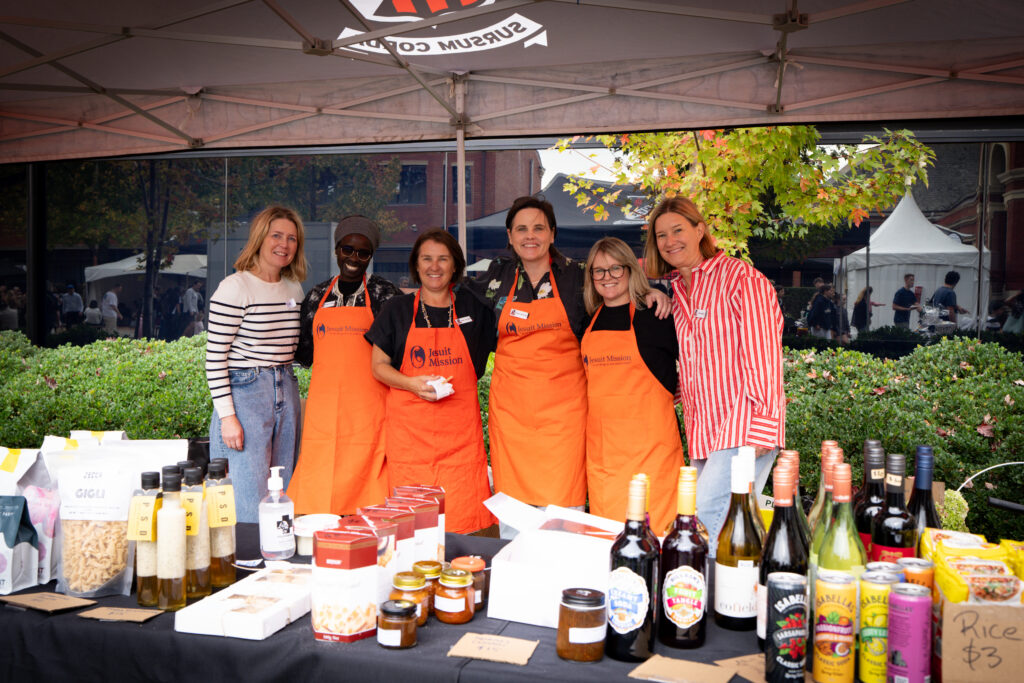
Friends of Jesuit Mission in Adelaide hosted a wonderful event on Saturday 23rd of February at the parish hall in Norwood. This event has been running for the past three years and with so much enthusiasm and gusto it looks forward to becoming an institution in the social calendar for Adelaide. The evening was a huge success thanks to a team of ladies gathered by Steph Hamra. The function along with refreshments and a silent auction was held in the parish hall. Jesuit Mission would also like to thank Father Paul Mullins SJ, the parish priest of Norwood, who kindly made the hall available for this event and encouraged his parishioners to attend. Also thank you to the friendly students from St Ignatius College, Athelstone who enthusiastically helped on the evening. This event raised funds for the Colégio Santo Inácio de Loiola, the recently opened college in Kasait, East Timor. These funds will contribute to a scholarship fund to insure that no child is turned away from the school because he or she was too poor to afford even the minimal fees of the school. Fr. Phil Crotty was there and presented a thoughtful view of what is taking place in Kasait with regard to the college and the teacher training institute. Students at St Ignatius College will be going on an immersion to East Timor in June. Thank you again to everyone involved.

Read more→

Edit

February 27, 2013 Maytime Fair Saturday May 4, 2013

Saturday the 4th May at 9am will see the opening of the gates at Xavier College Barkers Road, Kew for the annual Maytime Fair. There will be plenty of activities catering for the young and young at heart. Looking forward to seeing you there. Inquiries please contact Mrs Jo Bell on email: the5bells@optusnet.com.au

Read more→

Edit

February 20, 2013 Among the migrants in Mae Sot

Burmese migrants and refugees are benefitting from projects supported by Jesuit Mission in Mae Sot, a Thai town which sits close to the border with Burma, reports Catherine Marshall.

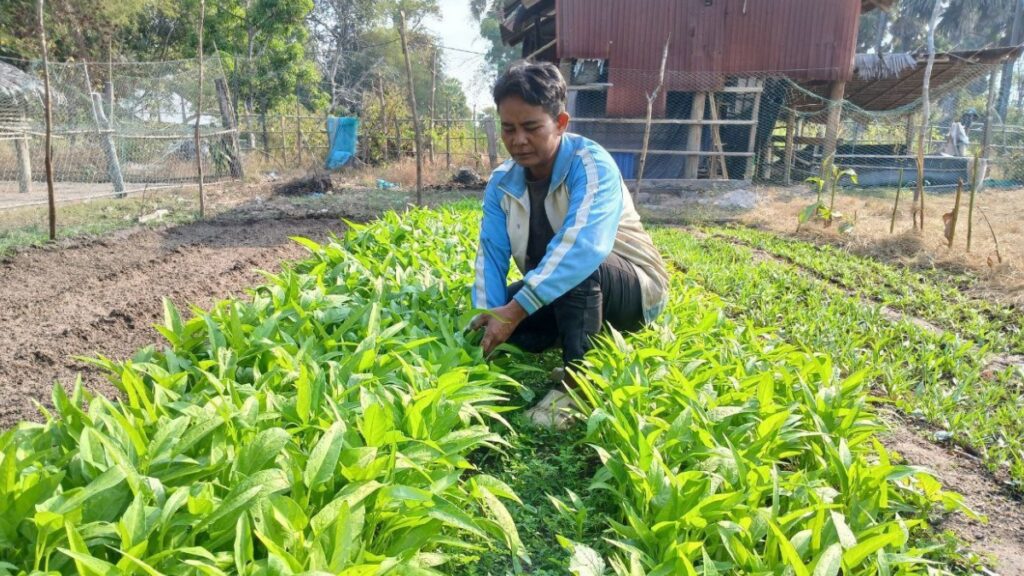
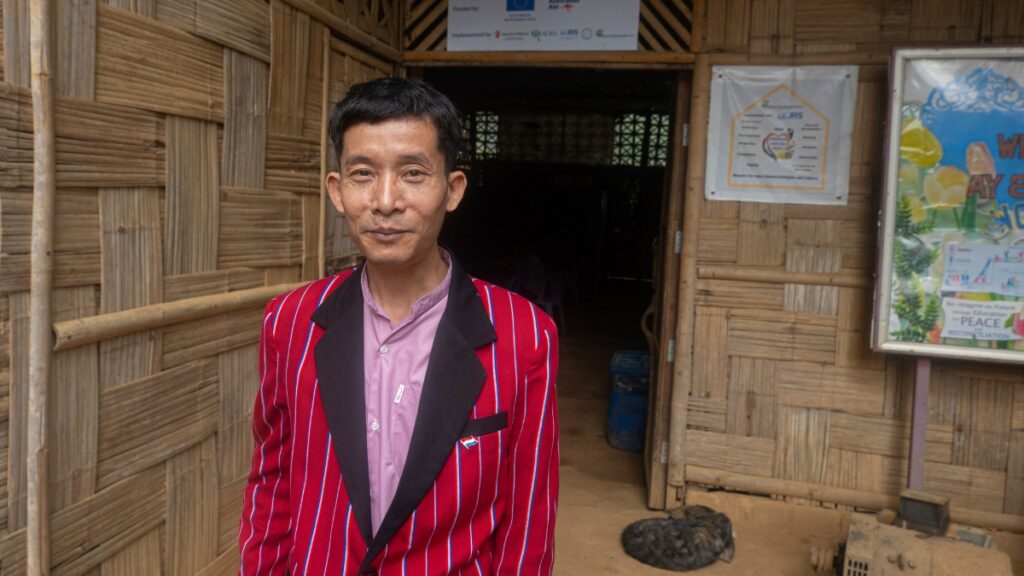
At four o’ clock every afternoon, Daw Mya San sets out boxes of curryDescription goes here... and monhinga – Burmese noodle salad - on a broad wooden platform outside the walls of a garment factory in Mae Sot. She has an hour in which to prepare before her customers start streaming out of the factory on their supper break. They are all Burmese migrants, and have come to Thailand in search of a better life; often they are exploited by their employers, forced to work long hours for little reward.

Daw Mya San came here herself two years ago in search of employment, and lives in the shadow of the factory in a house built from wood and palm leaves and set in a field of morning glory and wild vegetables. Rivulets of factory effluent run beneath and around her house, ducklings splash about in the water, and the water, in turn, attracts mosquitoes, which bring with them malaria and dengue fever.

Daw Mya San hasn’t seen her husband or adult daughter since she crossed the border into Thailand, but the sacrifice is worth it, she says; with support from JRS’s income-generating project for Burmese migrants – which receives funding from Jesuit Mission – she is able to improve her family’s lot.

‘At the beginning, she didn’t have enough investment, but she already had the skill,’ says Misheh, Community Development Officer with JRS in Mae Sot.

‘She needed financial support from us, and with that support she could run the business smoothly. From the success of selling her Burmese noodles, she could save money and extend her business for cooking curry and selling to the factory workers also.’

Daw Mya San’s house sits in a cluster of structures occupied by Burmese migrant families. The younger generation works in the factory, the elderly come to Thailand to take care of their grandchildren.

‘You see the grandparents are taking care of their grandson,’ Misheh says, pointing to a woman and a small boy in a nearby house. ‘In the night-time the children go quietly to live with their parents inside the factory. Every morning they have to quit from the factory by 8am so that the factory owner doesn’t know about this. The workers live in the factory compound, and they work overtime.’

But JRS’s program is giving some of these people a new avenue for income generation, and a greater deal of autonomy. Daw Mya San’s neighbour, Daw Mar Kyi - who sells deep fried snacks like roti, samosas and kya kway - is now able to send her son to a Thai school. If not for her income stream, the school fees and uniform costs would be prohibitively expensive.

Under the program, migrants receive financial assistance for the purchase of their start-up materials and ongoing business support.

‘We first interview them to see their business plan, how they can run the business successfully and also in a sustainable way,’ Misheh says. ‘Our policy is we support people one-off, but we have to follow up and monitor them for one year, working together with them to follow their business plan.’

Not far from Daw Mya San’s house is a roadside tuckshop decorated with pictures of Burmese opposition leader Aun San Suu Kyi. The shop is run by Burmese migrant Moe Moe San, who supports her disabled husband by selling food and other groceries to the factory workers and passers-by. Without JRS’s support, she would not have been able to keep the business afloat.

‘She didn’t have enough investment money and so she could not sell a variety of items that migrants want to buy from her,’ Misheh explains. ‘JRS is working with her in two parts: one is to keep a record for her family’s daily income and expenditure; another thing is a record for her grocery shopping and expenditure. She doesn’t have the skills to keep records and balance her income and expenditure, so now she’s learning from us how to have budget control. She’s also learned how much she can earn and how much she will need to spend.’

In Mae Sot, most Burmese migrants don’t have legal papers, and so they fear going to the market in town; it’s far preferable to shop at Burmese-run tuckshops on the outskirts of town, where they are less likely to be picked up by the police. At Moe Moe San’s shop the selection of goods is more varied now thanks to JRS’s support. She stocks rice and candles, dried fish, peanuts, dried papaya, and chillies, latphatok (Burmese tea salad made from tea leaves, beans, peanuts, chilli, sesame seeds, oil and salt) and fresh leaf tea from Burma, which she sells both in packets and by the cup, poured steaming hot from the flasks that line her counter.

It’s a hard life. Moe Moe San gets little time off and is constantly anxious about being picked up by the authorities, but she’s grateful for the assistance she receives from JRS and Jesuit Mission, and is hopeful that in the future she might cross the border back into her homeland.

‘One day if they welcome all of the migrants and refugees back to Burma, then she will definitely go back to there,’ Misheh says

Read more→

Edit

February 4, 2013 New Jesuit school gives East Timorese children a brighter future

The first Year 7 class has begun their lessons at the Colégio Santo Description goes here...Inácio de Loiola in East Timor, following the new Jesuit school’s grand opening on 15 January.

Jesuit Mission has been a major supporter of the Instituto de Educação Jesuíta project , which will eventually consist of the the Colégio Santo Inácio de Loiola high school and a teacher training college, the Colégio de São João de Brito.

Jesuit Mission provided funds to purchase the land for the institute, as well as funds for the construction of the first buildings, which opened this month just in time for the start of the school year.

Australian Jesuit schools and parishes have been asked to make the Instituto de Educação Jesuíta a priority in their fundraising efforts, with $5 million required over the next five years to complete the project.

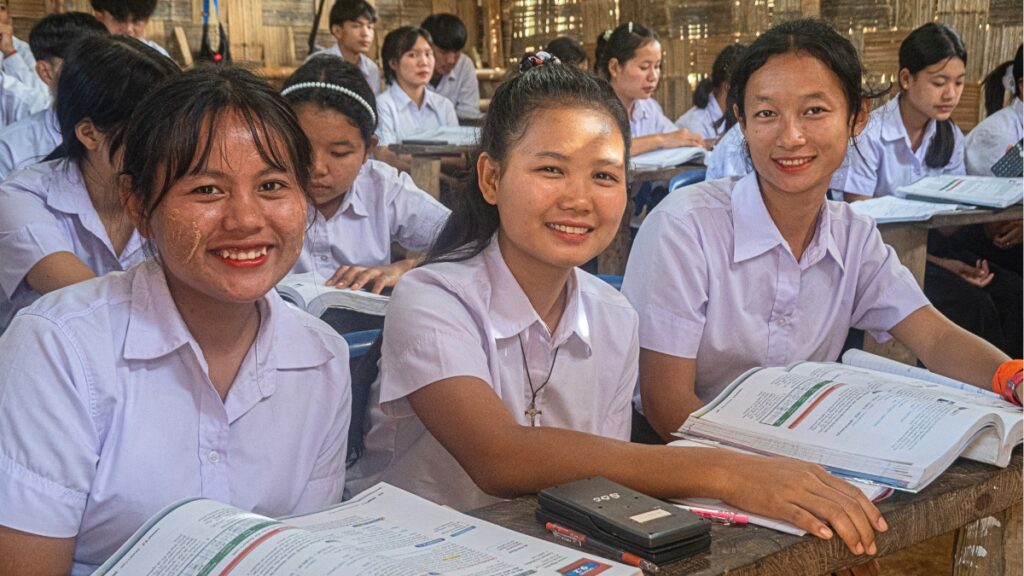
Writing from East Timor, Br Noel Oliver SJ says the inaugural Year 7 class are excited about the opportunities the new school will give them.

After years of discussions and discernment, the construction process for the Colégio Santo Inácio de Loiola was set in motion with the ground breaking ceremony on July 14.

At every meeting with the architect, constructors and consultants, Australian Jesuit Fr Quyen Vu was there pressing the point: ‘We need the building by 7 January, 2013!’ He pointed out to them the planned opening on 15 January, which was one week after all the other schools had opened their doors.

There were the usual hiccups, but with great hopes we went, early in the morning on 14 January, to take delivery of the first building. The workers had been working in late-night shifts in order to meet our deadlines. We needed to set up the furniture in the classrooms and the furniture in the temporary staff room. To our surprise the workers were still busy with the finishing touches, but finally, at about 5 pm that day, we were able to start moving the students’ desks to the classrooms.

The Jesuits and the teachers living at Cardoner in Kasait arrived early on 15 January. Some of us left early from Dili to be there before 8am, as the Mass was scheduled for 8.30am that morning. Many of the students were there at 7.30am.

Fr Joao Felgueiras, a Portuguese Jesuit who has been in Timor-Leste since the early 1970s, was there for the celebration. He does not look his age (93) and he is loved by the people for all that he has done for them over the years.

The parents and the students have great hopes in what the students can achieve because of the Jesuit education that they will receive here in Colégio Santo Inácio de Loiola.

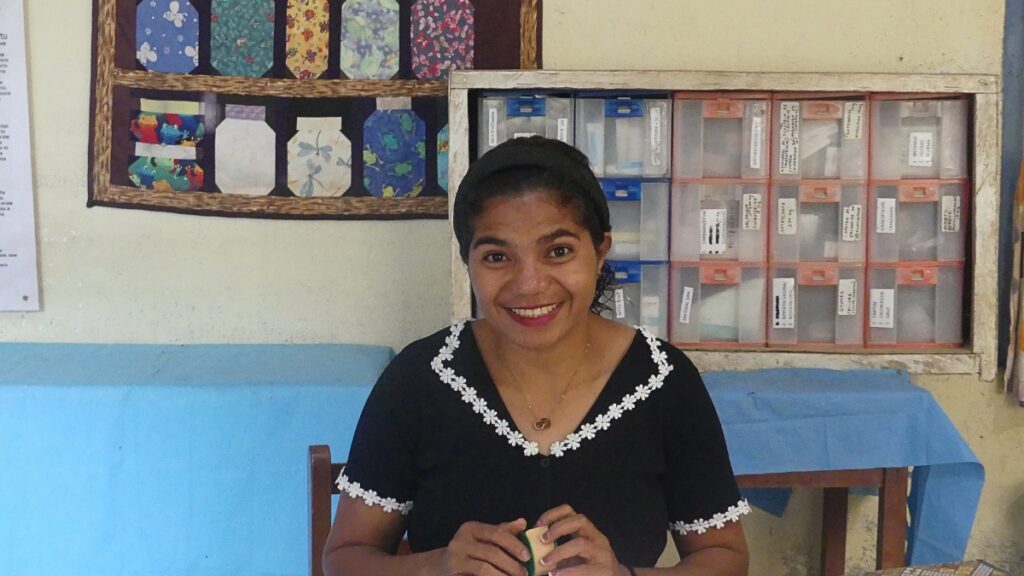
S. Maria Filomena de Jesus is one of the teachers. She told us, ‘ThisDescription goes here... school can become one that will show children the way. This is what parents want. It is with the collaboration of the parents, teachers and the Jesuits, that this school is going to become well known in the whole of Timor-Leste. My great hope is that this school will become a second Ateneo.’ (Referring to Ateneo de Manila University in the Philippines)

'We can never say it loud enough, but what has been achieved till now and what is to be achieved in the years to come is only possible because of the generous support that we have received from so many of our supporters from all over the world.

'On behalf of the Jesuits and staff of Colégio Santo Inácio de Loiola I want to say: THANK YOU VERY MUCH.'

Donations to this major initiative of the Australian Jesuit Province can be made via Jesuit Mission here.

For more on the East Timor education project, go to www.jceao.net/jesuit-education-timor-leste.

Read more→