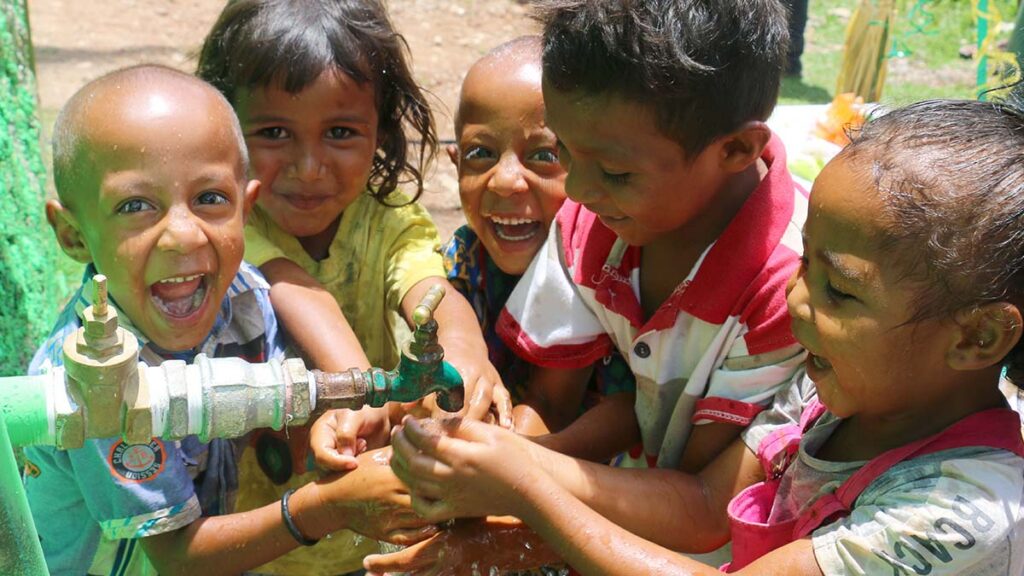
Australian donors transformed the lives of almost 1,800 people in rural Timor-Leste last year, with funds creating access to clean water and sanitation facilities for far-flung communities. This has had its own flow-on effect: young people who have grasped these new opportunities are now committed to transforming others’ lives.
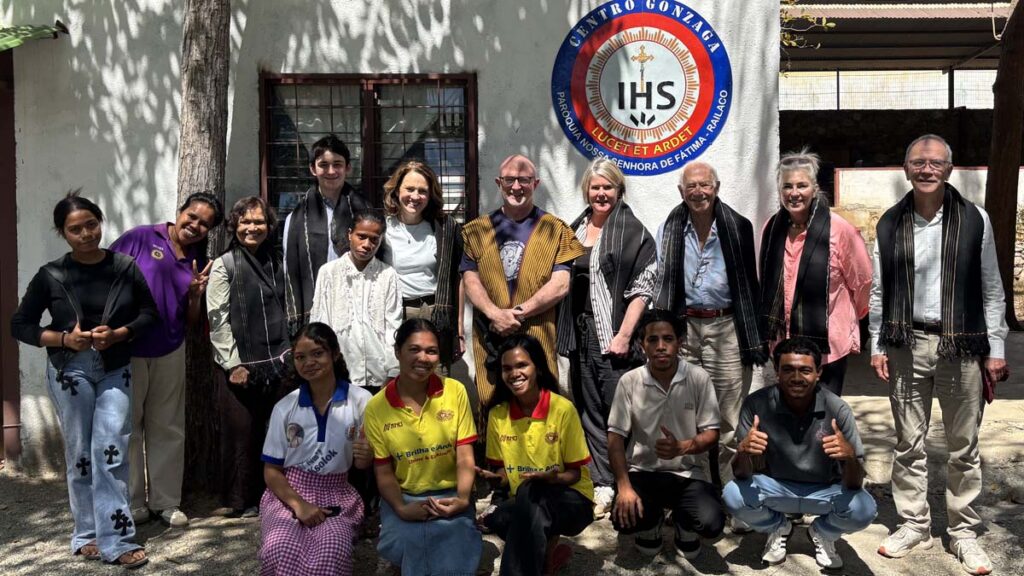
Two Jesuit Mission Australia employees, Philanthropy Coordinator Clare Dunstan and Community Engagement Coordinator Katrina Tucker, recently witnessed this first-hand. They visited the country this month and found that people in rural areas are not just improving their own lives, but are keen to help others in village areas elevate their own prospects as well.
The eight-day trip encompassed visits to the Jesuit Mission nutrition program; the Clean Water project; the food security program; the Jesuit school NOSSEF (Nossa Senhora de Fatima) in Railaco; the Gonzaga Centre, a youth development project; CSIL (Colégio de Santo Inácio de Loiola (CSIL), a Jesuit secondary school; and the Centro de Saúde Daniel Ornelas (CSDO) health clinic.
What were the highlights?
Clare said, “The highlight for me was seeing the clear sense of hope in the country as it moves forward. They have been through a lot of adversity, but the people exude hope and the desire to want to progress and develop.”
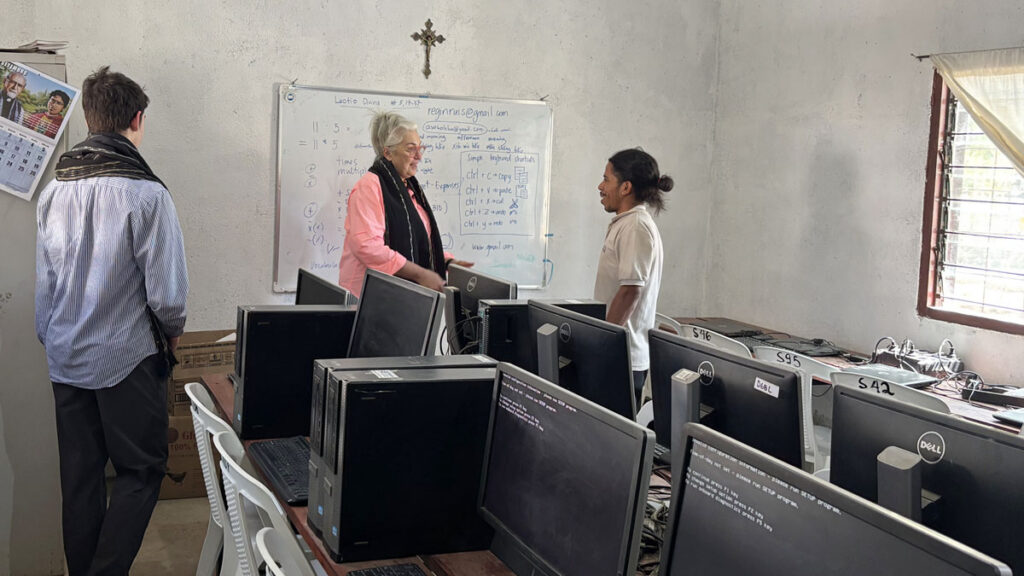
Katrina said one of the highlights for her was visiting the Gonzaga Centre at Railaco. “It’s where school leavers gain more confidence in their English-speaking abilities and then use that to go out and to get a job. These young people who have elected to be there have already improved their prospects by wanting to learn English.
“To begin with, some of the students were quite shy before coming up to speak to us but as they warmed up, they became far more engaged. They were happy to talk to us and to really understand what we were there for. I thought that was a particularly touching part of the whole trip. I realised that they really wanted to grasp the future. That part of the trip spoke to my heart because a lot of the young adults there are the same age as my children.”
Another highlight for Katrina was the Nutrition Program in Railaco. Funded by the parishioners of St Canice’s, this initiative was established in 2005. Operating across inhospitable terrain, it provides food to children up to the age of twelve in three remote villages – Cocoa, Caitarahei and Libdodo. While simple, these meals are often beyond the means of a family in rural Timor-Leste.
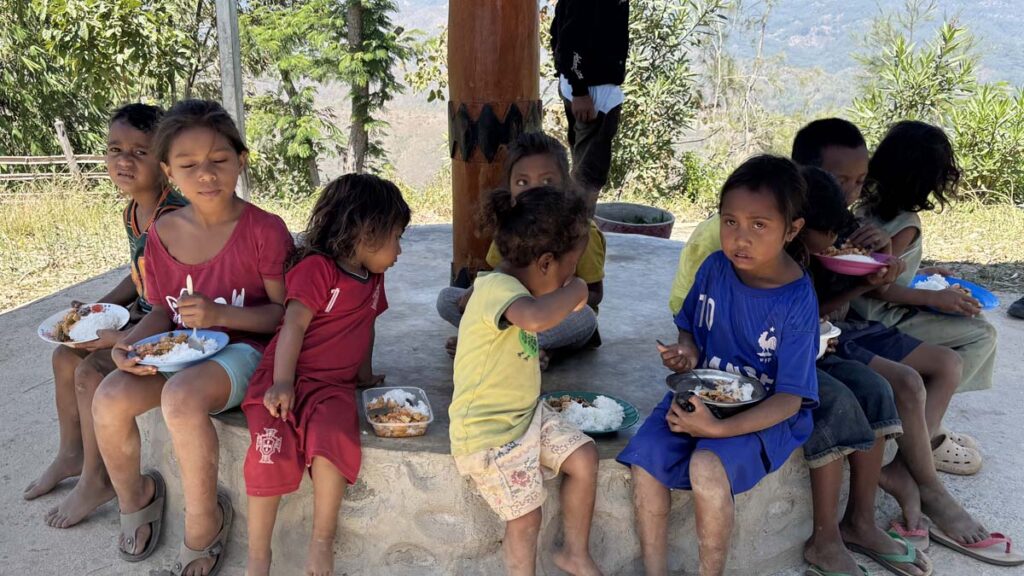
As Katrina explained: “This entails going out across rough terrain to the villages and feeding the beautiful children even while the adults become self-reliant and grow their own vegetables and food. This nutritious food makes such a difference to the children in a region where the incidence of malnutrition is very high.
“These beautiful little kids came running out to greet us and some of them had their little plastic bowls or plates. They would all say a prayer before they ate. Some would immediately eat what we gave them, and some would take their plate back home. You could see what a difference this made.”.
The transformative impact of clean water
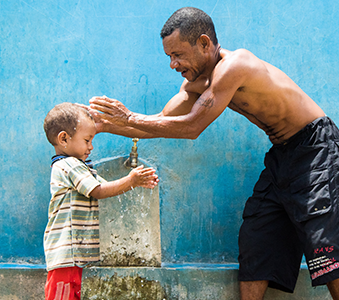
Another highlight was the Clean Water project run by JMA’s local partner, Jesuit Social Service Timor-Leste. Working in close partnership with rural communities, this has already established sanitation systems and provided pumped water to seven sub-villages through sustainable and locally owned initiatives.
Watch a video of the new water system in Hlalmeta village.
Being able to see the huge difference that the water project has made at Hlalmeta, where the villagers have had access to clean water since 2023, was especially significant for Clare. “To see what it’s done for the lives of people there, three and a half years on, was really incredible. For me, the opportunity to see and understand first-hand the programs that we are running there was great.
“The support from our donors is transforming people’s lives and that to me showed amazing impact. Another thing that really stood out was the commitment of the people there, too. Not just Jesuit Social Services partners, but the people within the villages who want to continue to make a difference.
“A lot of things moved me,” Clare added. “One of them was at the water project, because some of the people who came from the villages had been to ISJB (Instituto São João de Brito) the Jesuit-run institute for teacher education. Having completed that phase, they then went back to their villages to educate youngsters there. They are so committed to passing on of knowledge.
“Then on the Friday when we were at the teachers’ college and speaking to the students there, I asked them where they wanted to go next year after they graduated. Many of them said that they wanted to go back to their respective villages because that’s where they would make the greatest difference by giving the next generation more opportunities.”
Committed to progress
“Two young students were walking us around. One wanted to train to become a doctor. The other one wanted to become an astronomer. I thought, wow, you now have the space to dream, to aspire, and that is really what these programs do.”
The power of transformation was something that struck both the Jesuit Mission colleagues. Clare said, “People there might not have a lot, but they are committed to progress and they are very grateful because these programs have given them hope. People were really energised about how best to move forward.
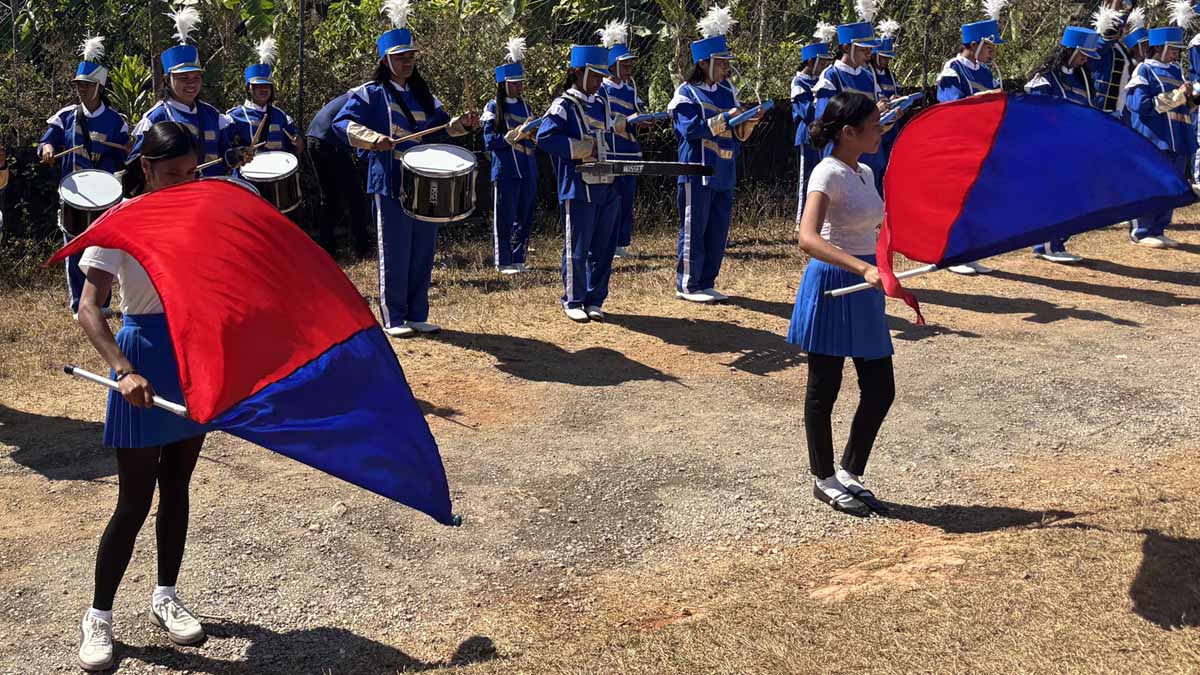
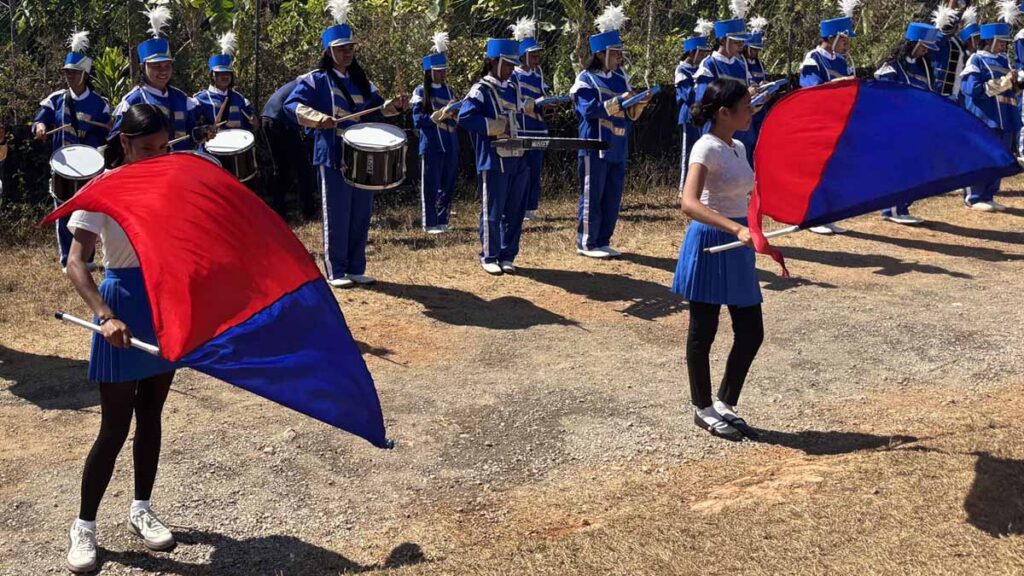
“While we were at NOSSEF, there were two young, very well-spoken students who were walking us around. One was the leader of the drum band that welcomed us. She wanted to train to become a doctor. The other one wanted to become an astronomer. I thought, wow, you now have the space to dream, to aspire, and that is really what these programs do. They do not just give people an education, or improve their lives, but also give them the impetus to develop for the future. They’ve realised that they are not limited in any way.”
Katrina agreed, saying, “I also saw that when we visited the Food Security program, established in 2022 to create lasting change. Our local partner, Jesuit Social Service Timor-Leste, works with communities to grow food, introduce vegetable farming and explore planting techniques. They even create fish farms because of the water that is now being pumped into the villages.
“One young woman, the village lead on the food security program that we visited, explained the difference that it had made. She told us what they do in their community to grow their own food, and while she said their lives had been improved, she pointed out how much better it would be if they could have water at the top of the hill instead of down the bottom. As she told us, they had to go down the hill to the water source and then take it back up to the crops.
“She said, ‘Imagine if we had a water pump to bring the water up here. In that case, we wouldn’t have to walk down, collect the water and come all the way back up. We could grow our crops in a place that is more accessible to us.‘ Listening to her vision for the future, I thought, that was fantastic. Not only does she see and acknowledge the difference that the food security program is making to her and her village, but she has a clear vision to take it further. I think that follows on from Clare’s wonderful point that they’ve been given the space to look ahead and to have that dream of the future.”
While those dreams and aspirations are fuelled by Jesuit Mission’s projects in the country, the generosity of our donors is the lifeblood that sustains this vital work.
Find out more about St Canice’s partnership with Railaco Parish.