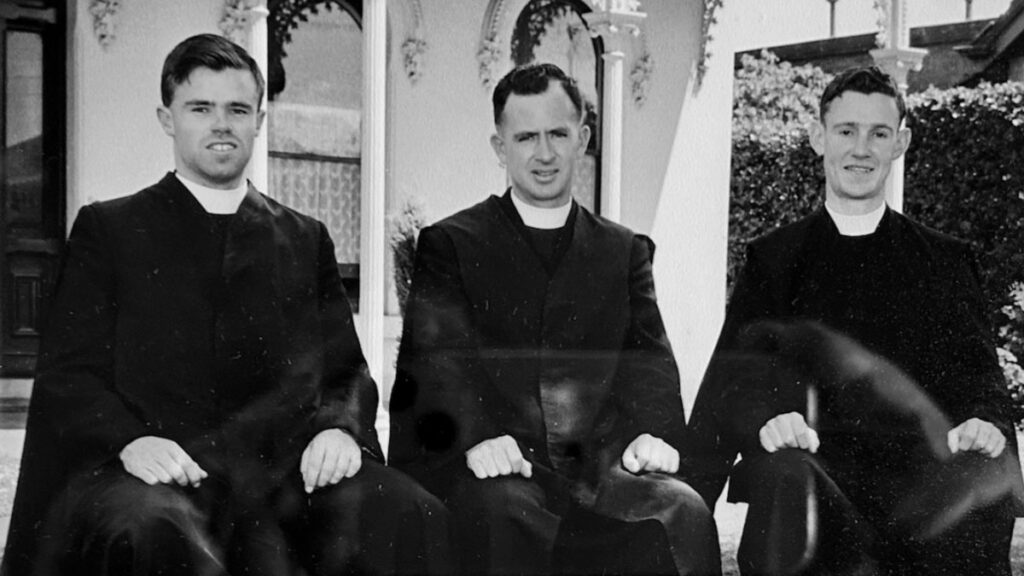
In 1958, Fr Bob Slattery and two other Jesuits, Tom Lees and Bernie Donnelly, sailed to India to join the first group of Australian Jesuits who had arrived seven years earlier.
“Arriving in India with two friends I felt good,” Fr Bob says. “But when I realised the villages had no electricity, mud houses, and the children didn’t attend school, the learning was huge.”
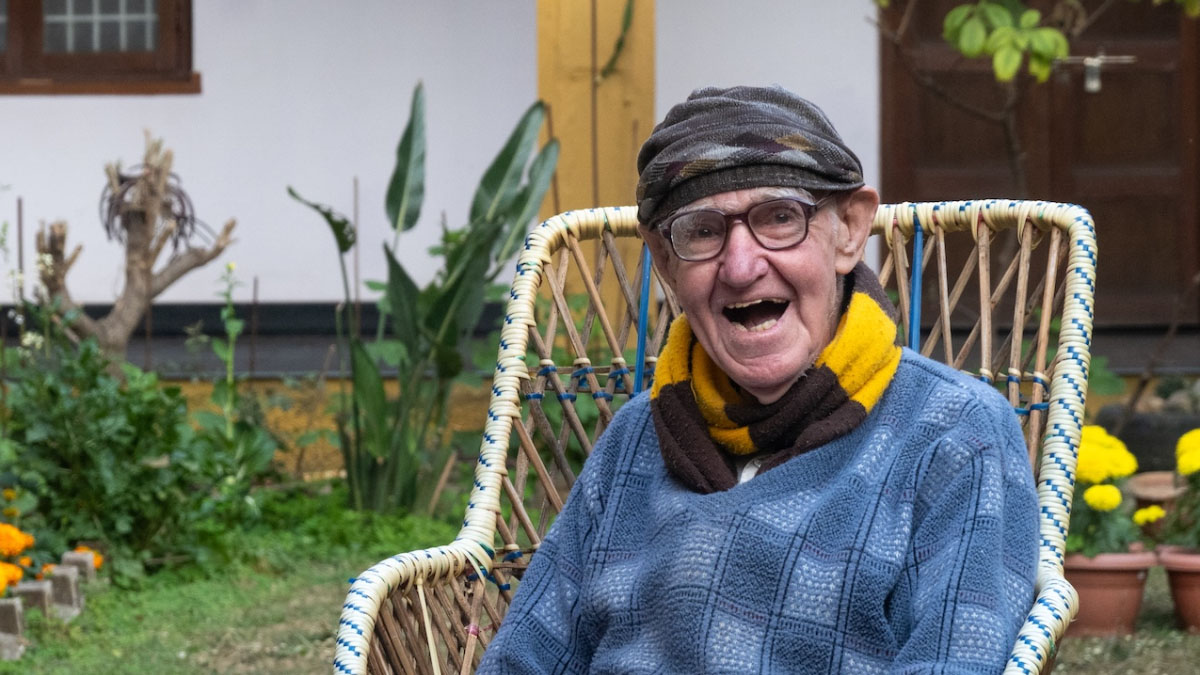
Fr Bob, who turned 92 last month, is the oldest of the last three surviving Australian Jesuit pioneers. As we celebrate our 75 years of faith in action, we asked Fr Bob to reflect on his experience.
As someone who has been a missionary in India since 1958, what does the ‘mission’ of Jesuit Mission mean to you?
The word mission from its roots means being sent out, but now as a Sydney-based Jesuit body, it means an organisation dedicated especially to raising funds for mission countries.
In the beginning, it meant raising funds for our Hazaribagh mission which began when the first six Australian Jesuits arrived in India in 1951. Now it means raising funds for multiple projects in different countries and not just in India.
“It is more blessed to give than to receive.”
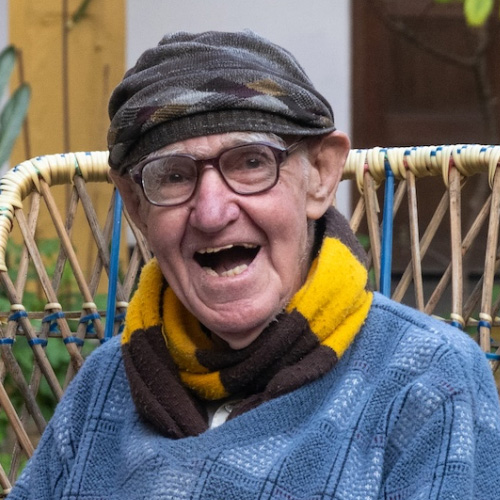
Father Bob wearing his beloved Hawthorn scarf
What led you to join the Jesuits and what were your feelings when you were told that you were going to India?
For my last three years of school, I was a boarder at St Patrick’s College in Sale, located in Victoria’s Gippsland region. Every year, a priest of a different congregation led us on a retreat and encouraged us to join them. I was in a Jesuit parish and found the Jesuits simple and kind, so I decided to join them.
Actually, I found the novitiate very tough and wanted to leave after three months, but the novice master Ned Riordan asked me to first do the long retreat and then decide what I wanted to do. I took his advice, did the retreat and stayed on though it was tough.
In fact, 10 of the 20 who joined with me left during their noviceship.
In my second year of philosophy at Watsonia during the annual retreat I got the inspiration to volunteer to go to India and later, I was happy when I was chosen to go with Tom Lees and Bernie Donnelly.
Your parents travelled to Hazaribag for your ordination. Was it hard for them to understand your passion for working in rural India?
I was ordained at St Stanislaus College Sitagarha on 26 March 1966 and was very happy that my father and mother were present, having travelled all the way from Melbourne for the occasion. They realised I was very happy there and saw some of our work as well.
With winter fast approaching in eastern India, you’re probably reaching for your Hawthorn scarf? Is it the most visible connection to the land of your birth?
Yes, I wear the Hawthorn scarf in the winter time and fortunately AFL matches are on TV here but I think the most visible connection with my land of birth is being white among all my very good Indian friends.
What message would you give to Australian donors who support the work of Jesuit Mission?
I would say that it is more blessed to give than to receive.
For me, mission means the assigned role I have in my Hazaribag Province to spread the Gospel, sometimes in a parish, sometimes in a school and sometimes in simply writing to people.
75 years of transformation
The foundations of Jesuit Mission Australia were laid on 6 February 1951, when the first Australian Jesuit missionaries travelled to rural Hazaribag in India’s Jharkhand state to serve Indigenous communities. Answering their vocation, these men – Fr John Moore SJ, Fr Ted O’Connor SJ, Fr Bert Balding SJ, Fr Kevin Grogan SJ, Fr Lou Lachal SJ and Fr Len Forster SJ – began a legacy of accompaniment that expanded beyond India in the 1990s and continues today.
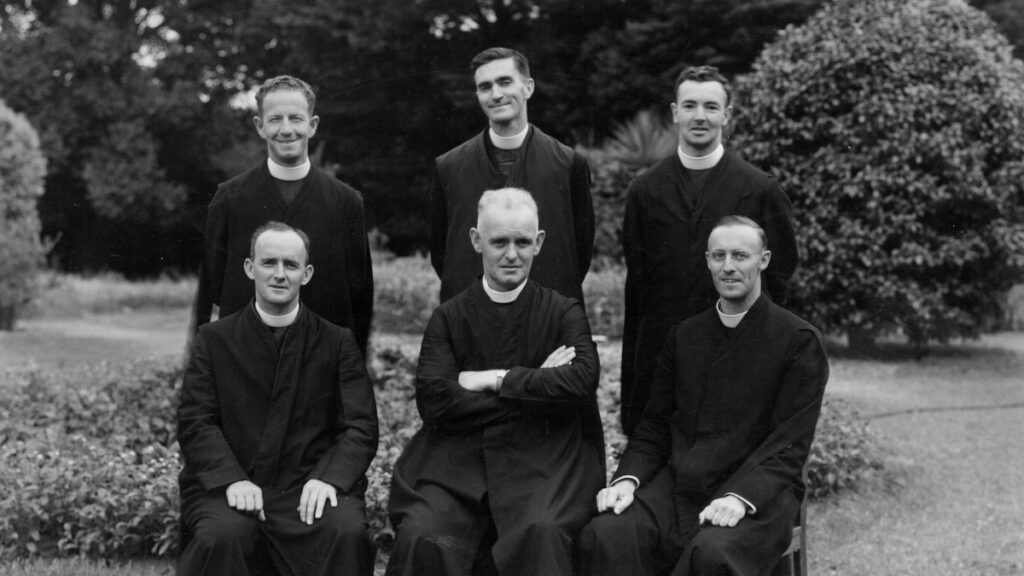
Hazaribag Provincial Fr Vincent Hansdak says what the Australians did in the region will never be forgotten.
“They transformed the area through their vision, dedication and tireless service. We acknowledge, remember, cherish and value all of the hardships that they had to confront in India in those early days.
“Hazaribag had few facilities, roads, vehicles, transport and certainly none of the normal aspects of life that people would have been used to in Australia.
“Those men had great spirit and they would traverse the region on foot or on bicycles or even sometimes on horseback in order to reach out to the poor people in far-flung parts of what was then a very remote province in a rural, impoverished area.
“Later, in the middle of all the social work they were doing from dawn to dusk, seven days a week, they realised that another aspect of importance was educating people in this backwater of India, shortly after the country had been granted Independence from Britain.
“With that view, they started up the schools – St Xavier’s in Hazaribag, St Xavier’s in Bokaro, and many others. Inspired by their spirit, we Indian Jesuits can see the importance of their hard work and the amazing foresight they showed 70 years ago. They literally saw how the world would unfold and how the needs of this rural area could best be served.”
Find out more about our 75 years of faith in action.